Why Employers Failed To Pay National Minimum Wage: Naming and Shaming
Are you worried your staff may not be paid the National Minimum Wage or that your payroll is wrong? We reviewed HMRC naming-and-shaming lists, gov.uk guidance and Low Pay Commission reports and found more than 13,000 workers underpaid by over £1.9 million in August 2018.
We explain how employers such as Argos and Debenhams made accounting errors, which common practices lead to underpayment, and what HR teams must change to meet the national minimum rate. Read on to fix your payroll risk.
Takeaways of this National Minimum Wage Naming and Shaming Study:
- Over 13,000 UK workers were underpaid by more than £1.9 million as of August 2018, with Argos and Debenhams among the largest offenders (HMRC records).
- Employers failed to pay the National Minimum Wage mainly due to payroll mistakes, poor overtime calculations, uniform deductions, and unpaid work-related activities (Low Pay Commission findings).
- Government’s “naming and shaming” scheme publishes lists of non-compliant employers; this includes major retailers like Argos (12,000 underpaid) and Debenhams (11,000 staff affected), driving public awareness.
- Fines issued since October 2013 have reached £4 million alongside repayment orders for back pay; enforcement is led by HMRC in partnership with ACAS and the Low Pay Commission.
- Non-compliance spikes after minimum wage rate increases; regular audits using tools like Sage or Xero help prevent errors—new rates apply from April 2026: £12.71/hour for ages 21+, £10.85 for ages 18–20, £8.00 for youth/apprentice rates.

How does the government enforce National Minimum Wage compliance?
The government enforces National Minimum Wage compliance through various means. They conduct inspections and audits to ensure businesses pay their employees correctly.
What is the naming and shaming initiative?
The naming and shaming initiative is a government-led effort to publish employers who fail to pay the national minimum wage. The Director of Labour Market Enforcement oversees the programme and the published lists have featured hundreds of employers, including high-profile retailers and smaller businesses.
Public naming is used to raise awareness and to create reputational deterrence, and large employers often appear after minor payroll errors. The number of non-compliant cases has risen quarter on quarter, so ACAS, UNISON and the Living Wage Foundation monitor trends and advise on compliance with national living wage, national minimum wage rate and the minimum wage in GB.
What are the recent trends in National Minimum Wage non-compliance?
Trends in National Minimum Wage non-compliance are monitored closely.
|
National Minimum Wage: Trend |
Summary Points for Business Owners, Founders, Managers, HR Managers |
|---|---|
|
National Minimum Wage, Rising Non-Compliance |
Employers failing to meet NMW are recorded to be rising quarter on quarter. This increase affects many sectors, not just small firms. |
|
National Minimum Wage, Types of Employers Most Affected |
Retail chains with large workforces appear frequently. Certain employer types repeat on underpayment lists. |
|
National Minimum Wage, Timing Around Rate Changes |
A spike in non-compliance is observed in the three months after rate increases. The Low Pay Commission reporting cites this recent surge. |
|
National Minimum Wage, Size of Employer Effect |
Larger employers surface more often due to small payroll errors creating big shortfalls. Payroll scale raises detection risk and impact. |
|
National Minimum Wage, Examples and Notable Names |
Well known firms, such as Argos and Debenhams, are highlighted for underpayments. Other large shops have also featured on enforcement lists. |
|
National Minimum Wage, Causes Identified |
Causes include deliberate underpayment and systemic payroll mistakes. Common faults in payroll, shift recording, and deductions handling are reported. |
|
National Minimum Wage, Enforcement and Data Use |
HMRC and the Low Pay Commission are referenced as enforcement and advisory entities. Trend analysis is used to guide future compliance and enforcement strategies. |
|
National Minimum Wage, Financial Impact |
Significant aggregate underpayments and fines are recorded, magnified by large employer cases. Small errors can lead to large total liabilities. |
|
National Minimum Wage, Payroll and HR Tools |
Payroll software checks, such as Sage and Xero, are recommended, along with HR system audits. Regular compliance audits and the use of compliance software are encouraged. |
|
National Minimum Wage, What This Means for Managers |
Tightening shift records and verifying deductions like uniform costs are advised. Prompt review after any NMW rate change is urged to avoid the common post-increase spike. |
How much has been underpaid and what fines have been issued?
We have reviewed HMRC enforcement records and summarised the scale of underpayments and financial penalties.
|
News Headline |
Details |
|---|---|
|
Workers identified as underpaid |
Over 13,000 workers underpaid as of August 2018. Since October 2013, identified cases affect many thousands more. Audits confirmed multiple payroll errors. |
|
Total underpayments discovered |
More than £1.9 million underpaid by August 2018. Aggregate identified underpayments since October 2013 total about £6 million. HMRC investigations drive repayment to affected staff. |
|
Monetary fines issued |
Total fines since 2013 amount to £4 million. Fines are set to punish non-compliance and deter repeat breaches. Penalties sit alongside mandatory repayment obligations. |
|
Argos case |
Argos underpaid about 12,000 workers. Shortfall approached £1.5 million in August 2018. Company required to repay affected employees. |
|
Debenhams case |
Debenhams underpaid roughly 11,000 staff. Total shortfall recorded at £134,000. Repayments were mandated by HMRC enforcement. |
|
Other notable retailers |
Multiple retail chains featured in HMRC probes since 2013. Each case resulted in repayment requirements and, in many instances, fines. Retail pay systems often trigger breaches. |
|
Enforcement mechanism impact |
HMRC-led investigations recover wages for employees. Fines totalling £4 million aim to change employer behaviour. Enforcement data has been used to improve payroll controls. |
Which employers have been found underpaying workers?
Many businesses have faced scrutiny for not paying their workers enough. Argos and Debenhams are two notable examples of companies that failed to adhere to the National Minimum Wage guidelines.
These cases highlight a troubling trend within the retail sector. Other major retailers also fell short, impacting many employees in similar ways.
How did Argos underpay its workers?
Argos underpaid 12,000 workers by nearly £1.5 million in August, topping the government naming and shaming list at that time. Government enforcement discovered payroll errors linked to pay reference period calculations and payroll tools.
The scale far exceeded that of other named employers.

We must treat payroll checks as a legal duty, not an optional task.
Argos was required to repay all affected staff and to face financial penalties under national minimum wage rules. The case showed how national minimum salary and national living wage compliance can fail in large retailers.
HR managers are urged to audit pay reference period records and to review systems such as ADP payroll services to prevent errors. Next, we examine how Debenhams underpaid its workers.
How did Debenhams underpay its workers?
Credit: The Guardian
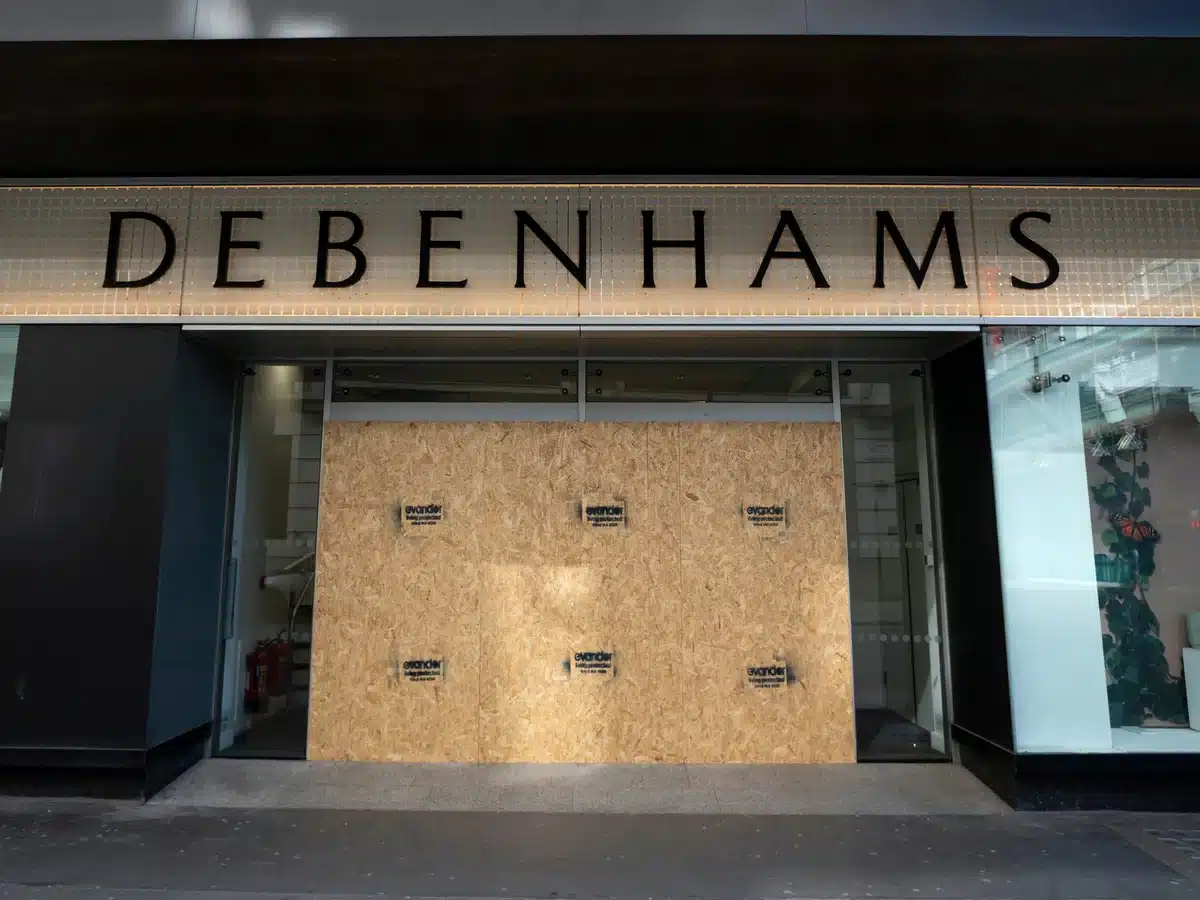
Debenhams underpaid 11,000 employees by £134,000. The company claimed an accounting error caused this mistake. Such errors expose how minor payroll issues can significantly affect large businesses.
By falling short of the national minimum wage requirements, Debenhams found itself at the top of the UK government’s list of employers who failed to pay correctly.
The enforcement programme detected and publicised the underpayment issue. This prompted a demand for repayment to affected staff members. Debenhams’ experience serves as a cautionary tale for other retailers regarding potential payroll inaccuracies.
Accurate payroll practices are crucial in ensuring compliance with national wage standards and protecting employee rights.
Which other notable retailers have underpaid workers?
- Monsoon has appeared on government lists for failing to pay staff properly. This retailer’s practices raise questions about wage management and compliance with the national minimum wage regulations.
- Other major high street brands also feature prominently in these lists. They reveal a pattern of non-compliance that affects many employees, leading to significant financial impacts.
- Retail giants must address common issues such as uniform charges, which often reduce actual wages. Imposing costs on staff can lead to confusion about their rightful earnings under the national minimum wage laws.
- Many employers inaccurately account for overtime hours worked by employees. This oversight results in unpaid time and contributes to a systemic problem within the industry.
- Businesses frequently fail to compensate staff for necessary work-related activities outside their primary roles. This lack of payment undermines the principles of fair compensation outlined by the national minimum wage act.
- The recurring presence of these retailers on government lists emphasises a need for better payroll systems across the industry. Developing strong processes can help avoid violations and protect employee rights.
- Increased public scrutiny has put pressure on retailers to improve compliance measures swiftly. Adapting practices now will enhance employer reputations and ensure fair pay for all workers involved.
- These instances serve as a cautionary tale for businesses not prioritising adherence to wage laws. Committing to proper payments fosters confidence between employers and employees while promoting stability in the workplace.
- As trends are observed, it becomes clear that effective enforcement mechanisms are essential in ensuring wages meet legal requirements and standards are upheld throughout the sector.
What common practices lead to underpayment of wages?
Many employers charge their staff for uniforms, which cuts directly into workers’ pay. Staff often find that overtime isn’t accurately calculated, leaving them shortchanged. Certain work-related activities, like training or meetings, may also go unpaid. These practices create gaps in wages and contribute to non-compliance with the national minimum wage regulations. Grasping these issues can help businesses comply better and treat their workers fairly. Investigate further to learn how you can avoid these pitfalls and protect your employees.
How does charging for uniforms affect wage payments?
Charging employees for uniforms can significantly affect their wage payments. Employers often deduct these costs from workers’ paychecks, which may lower their effective earnings below the National Minimum Wage (NMW) threshold.
Uniform deductions must be considered when calculating NMW eligibility. This practice is a common cause of underpayment identified by HMRC in various industries.
Retailers frequently face scrutiny for such deductions as they commonly require staff to wear uniforms. In high-profile cases, companies have been cited for underpaying workers due to uniform costs.
Employers should adjust wages to ensure that payments do not fall beneath statutory minimums after accounting for any uniform charges. Understanding this obligation helps ensure compliance with the law and protects workers’ rights effectively.
How is overtime often inaccurately accounted for?
Employers often miscalculate overtime hours, which can lead to significant underpayment of wages. In many cases, a lack of proper payroll management contributes to these errors. Misunderstanding regulations also plays a role in this issue.
Complicated shift patterns within large organisations make accurate tracking even more difficult. As a result, employees may receive pay below the National Minimum Wage (NMW).
Inaccurate accounting of overtime has severe consequences for both employers and workers. Government enforcement actions highlight these miscalculations frequently, revealing the financial penalties tied to them.
Detailed records must be maintained to prevent such issues. Regular audits of overtime payments are essential for NMW compliance and ensure that all worked hours meet minimum wage requirements effectively.
What work-related activities are frequently unpaid?
- Bag searches after shifts take up valuable time. Employees frequently wait for security checks before leaving the workplace, yet this time often remains unpaid.
- Many firms implement security checks before shifts begin. Workers must arrive early for these checks without receiving pay, which breaches NMW regulations.
- Training sessions sometimes occur outside of scheduled hours. Employers may require staff to attend training beyond their regular hours, failing to compensate them properly.
- Meetings that run into breaks are common in workplaces. Employees might find themselves attending meetings that extend beyond their scheduled hours but receive no additional pay for the extra time spent.
- Uniform costs can significantly impact wage calculations. Charging employees for uniforms detracts from their overall wages and may push them below the national minimum wage threshold.
- Maintenance or cleaning tasks often go unpaid as well. Employees might be expected to tidy up their work areas once their shift ends without receiving compensation for this time.
- Unpaid breaks can also pose a problem in many sectors. Employees may not receive payment during mandatory breaks, affecting total earnings and compliance with the National Minimum Wage.
- Travel time between locations sometimes remains uncompensated when employees work at multiple sites during a single day, leading to further underpayment issues.
- Certain preparatory work may be undervalued or ignored entirely by employers who fail to account for time spent setting up before service begins or closing down after hours.
- Lastly, overtime work frequently experiences inaccurate accounting practices that result in workers not being fully compensated for additional hours worked beyond their regular schedule.
Addressing these common issues leads directly to discussions about how increased awareness and better management practices contribute positively to NMW compliance efforts.
What is the impact of National Minimum Wage rate increases and reviews?
National Minimum Wage rate increases often lead to a noticeable rise in non-compliance cases. The Low Pay Commission reports that these cases peak in the three months following any rate change.
Employers should update pay structures promptly after these adjustments. If payroll systems lag behind, they may face significant arrears and fines as a result of underpayment.
Regular reviews have enhanced awareness and compliance among business owners. The government closely monitors trends in adherence after rates change, making timely communication essential for smooth transitions.
Conducting regular payroll audits around updates helps avoid unintentional breaches of wage laws, safeguarding both employees and businesses from penalties.
What are the author’s qualifications and expertise?
Our expertise stems from over 11 years of experience in Employment Law, HR, and Health & Safety. Ian Devlin leads the way in advising UK employers on compliance and risk reduction.
He collaborates with us through Avensure Ltd and The Employment Advice Bureau. We focus on contracts of employment, disciplinary procedures, grievance handling, redundancy law, and unfair dismissal cases.
We also assist businesses with health and safety compliance in workplaces. Ian is known for providing practical advice written in plain English. His qualifications make him a reliable source for addressing intricate issues related to National Minimum Wage compliance.
With this knowledge, employers can avoid costly mistakes while ensuring fair pay practices across their organisations.
What are the current National Minimum Wage rates?
Following our qualifications, we now set out the current National Minimum Wage rates. We present the legally required hourly rates that took effect in April 2026.
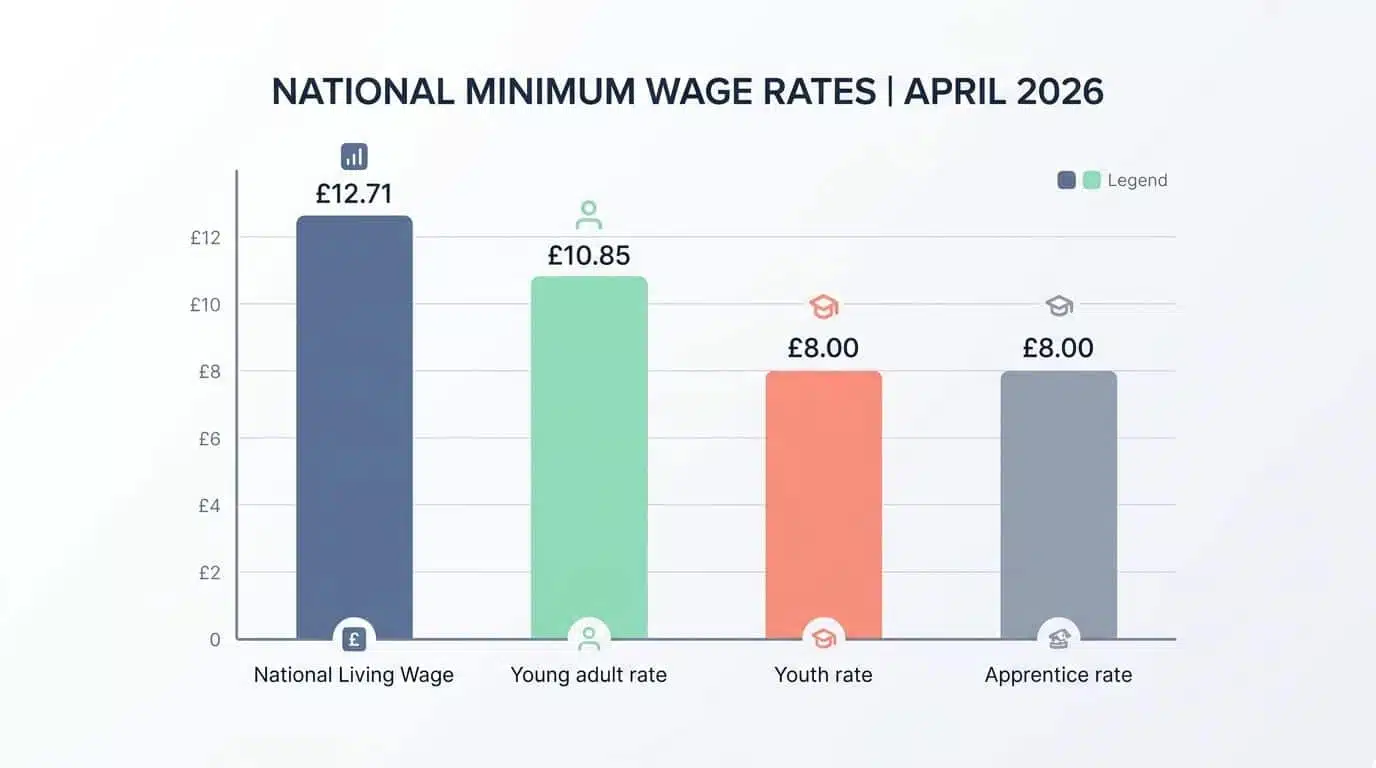
|
Rate category |
Age or status |
|---|---|
|
National Living Wage |
Age 21 or over |
|
Young adult rate |
Age 18 to 20 |
|
Youth rate |
Under 18 |
|
Apprentice rate |
Apprentices under 19, or 19+ in first year |
- We note the Low Pay Commission makes formal recommendations on rate changes.
- We recall the review schedule moved, with the next scheduled NMW rate review set for April 2018.
- We warn employers to update pay rates annually to align with government announcements.
- We state the rates vary by age and apprenticeship status.
- We highlight that rate information is widely publicised to support compliance.
- We advise payroll platforms and HR systems must reflect these rates immediately after announcements.
- We remind that failure to comply can cause underpayment and trigger HMRC penalties.
What are the key facts about National Minimum Wage calculation and enforcement?
National Minimum Wage calculations are crucial for ensuring fair pay in the workforce. Understanding how these calculations work helps us maintain compliance and avoid penalties.
Use Our National Minimum Wage Calculator
National Minimum Wage Calculator
Check compliance, calculate underpayment exposure, and find the right rate for every worker
Must be at school leaving age or above
EAB members get unlimited access to employment law advisers who can confirm the correct rate and help you avoid costly HMRC enforcement.
Difference between what was paid and the applicable minimum rate
HMRC can recover up to 6 years of arrears (312 weeks)
EAB members get immediate guidance on self-correcting underpayments and notifying HMRC voluntarily to reduce penalty exposure.
| Period | 21+ (NLW) | 18–20 | Under 18 | Apprentice |
|---|---|---|---|---|
| Apr 2026 ★ | £12.71 | £10.85 | £8.00 | £8.00 |
| Apr 2025 | £12.21 | £10.00 | £7.55 | £7.55 |
| Apr 2024 | £11.44 | £8.60 | £6.40 | £6.40 |
| Apr 2023 | £10.42 | £7.49 | £5.28 | £5.28 |
| Apr 2022 | £9.50 | £6.83 | £4.81 | £4.81 |
★ Current rates from 1 April 2026. Source: GOV.UK. Updated annually.
EAB members receive alerts when NMW rates change, with action checklists to keep payroll compliant from day one.
- National Minimum Wage (NMW) is calculated based on gross pay before tax and National Insurance deductions. This means all mandatory payments get included, ensuring accuracy in wage calculations.
- Certain payments do not count towards minimum wage calculations. Tips, some allowances, and benefits cannot be included when we assess if our employees receive the correct wage.
- HM Revenue and Customs (HMRC) oversees enforcing NMW rules across the UK. They conduct regular audits to check for compliance and ensure employers adhere to the law.
- Employers who breach NMW rules must repay any underpaid wages to affected employees promptly. This repayment includes all arrears from the period of non-compliance.
- Non-compliance can lead to substantial fines for employers, along with the need to repay underpaid amounts. These penalties serve as a strong deterrent against failing to meet NMW obligations.
- Nearly all workers in the UK are covered by minimum wage laws, with few exceptions such as self-employed individuals or certain apprenticeships that may have different criteria.
- The government provides tools and guidance online to assist employers with NMW calculations, making it easier for us to comply with regulations.
- Regular checks on payroll processes help ensure accurate NMW compliance at all times; this practice helps identify any discrepancies early on.
- Accurate documentation plays a vital role in proving compliance with NMW regulations during audits or inspections by HMRC.
- Awareness of current national minimum wage rates is essential; staying informed about annual updates enables adjustments to wages and effective compliance.
Understanding these key facts allows effective management of responsibilities regarding National Minimum Wage while supporting workforce rights. The next section will address how employees can verify if they are paid correctly.
How can employees check if they are paid correctly?
- Use the official “Check Your Pay” tool to verify if the correct NMW is received. This resource provides clarity on wage entitlements and helps identify potential discrepancies.
- Review payslips regularly to confirm that every hour worked is compensated at or above the NMW. Employees should closely examine deductions for any misunderstandings about total earnings.
- Consult guidance from Acas, which provides information about pay rights and entitlements. This aids in advocating for fair treatment in the workplace.
- If underpayment is suspected, report the employer to HMRC without hesitation. Taking this step can initiate an investigation and protect employee rights.
- Keep track of hours worked, including overtime and unpaid tasks, to ensure accurate records if issues arise later. Documenting work hours enables presentation of evidence if needed.
- Engage with fellow employees to discuss wages openly, fostering a collective awareness of payment standards. Shared experiences can lead to stronger advocacy for equitable pay practices.
- Research current NMW rates frequently since they may change over time, impacting earnings directly. Staying informed ensures awareness of what should be received based on age and working conditions.
- Seek advice from employment law advisory services when uncertain about pay situations or possible violations of rights; professional assistance is available for individual circumstances.
- Contact relevant government agencies for support regarding concerns about wage payments or compliance issues faced by workers in various sectors; these organisations provide vital resources and assistance.
Final Words on National Minimum Wage (NMW)
Employers face serious consequences for failing to pay the National Minimum Wage. Recent reports show an alarming rise in underpayments across various sectors. Our findings highlight that many breaches arise from simple accounting errors, not always intentional misconduct.
Employers are urged to ensure compliance and protect workers’ rights by staying informed on wage regulations. Working together fosters a fairer workplace for all.
National Minimum Wage Naming & Shaming FAQs
1. What law sets the pay rules?
The National Minimum Wage Act 1998 sets the rules for the national minimum wage and the national living wage. It covers the national minimum and living wage across the UK.
2. Why did some employers fail to pay the correct amount?
Employers misread rules on the new national minimum wage, they missed the national minimum wage raise or the nmw increase, or they misapplied rates for the national working wage. Some ignored updates to the national living wage increase and the increase in national living wage.
3. Who must get the right pay?
Workers over 21 must get at least the minimum wage for over 21s. Pay for the minimum wage for 25 year olds and the minimum wage for over 25s follows uk minimum wage rates, including uk minimum wage over 25 and 25 minimum wage. Rates differ by place, such as England national minimum wage, northern ireland (the region) and london (the capital city).
4. How can I check a pay shortfall?
Use an official calculator to check the national minimum wage amount and current minimum wage in england. Check case law, such as the Whittlestone Eat judgement, and the National Minimum Wage Act 1998 for legal detail. Do a DBS check or a background check if the role needs it.
5. Are there special pay rules?
Yes. The agricultural minimum wage has its own rules. Apprentices in higher level apprenticeships may need specific pay checks. You must know the difference between national living wage and minimum wage, national living wage v minimum wage, and minimum national living wage rules.
6. How can naming and shaming help change practice?
Public naming highlights failures and drives employers to fix pay gaps. It pushes firms to update pay after a national minimum wage increase or national minimum wage raise. It also links to campaigns like living wage week to win fair pay and better compliance.
The Employment Law Advice Bureau (EAB) is a free UK-based employer advisory service providing free HR, employment law, and health & safety advice to UK employers. EAB supports business owners and directors with actionable guidance to protect their businesses, avoid costly mistakes and ensure compliance. Launched in 2013, EAB is backed by Avensure, a consultancy offering HR, Employment Law, and Health & Safety support. EAB provides a free membership platform that offers practical, employer-focused guidance in line with the ACAS Code of Practice. Note that EAB is a service provided by Avensure and has no connection or affiliation with ACAS.
The team of support experts at EAB specialise in employment law, HR outsourcing, and health & safety outsourcing services across the UK. With over a century of combined experience, the team includes seasoned lawyers and HR specialists who previously worked at major law firms, multinational corporations and smaller UK SMEs. Their expertise has been shared at industry conferences and through contributions to leading trade publications.
Customer feedback affirms their impact: “They solved our compliance issues and improved employee satisfaction.” EAB also features case studies on successful projects, such as improving safety protocols for a major manufacturing firm. Their commitment extends to ethical practices and community support through regular free workshops on workplace rights.
Employment Law Advice Bureau stands as a knowledgeable partner delivering excellence in employment law and HR services.